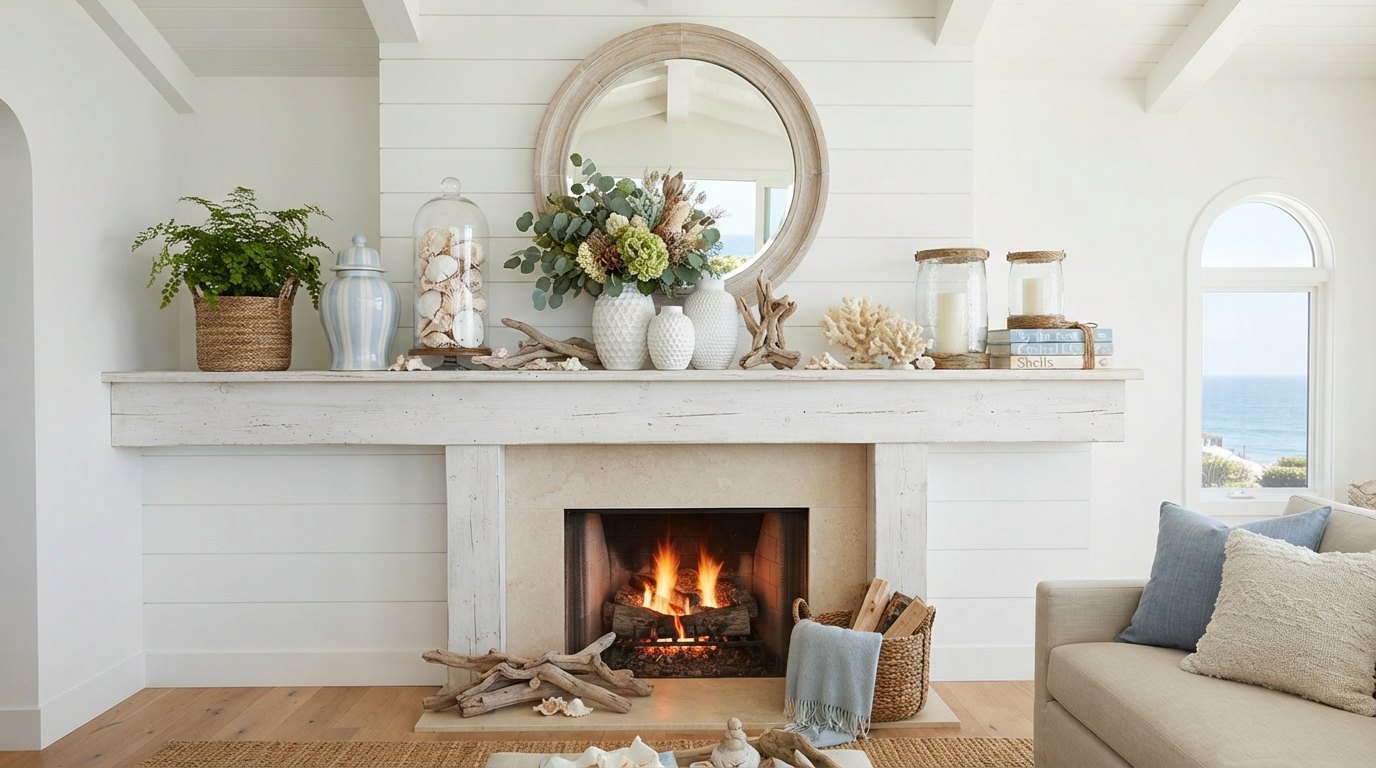
A coastal mantel with texture and a quiet collected feeling starts with a few clear decisions. The aim is proportion, secure placement and appropriate fireplace clearances, with the room’s existing finishes and household routines setting the direction. This guide works through the choices in a practical order so you can adapt the idea rather than copy an entire photographed space. Begin with the part that is causing the most difficulty, and keep any useful feature that already works.
Consider ceramic vessels, pale frames, muted artwork and a small botanical detail as possible ingredients, not a compulsory shopping list. Compare their scale, care and suitability with what you already own. A restrained change can make the subject easier to manage without starting a complete renovation. Where a recommendation depends on a product specification or specialist installation, verify that information for the actual item and location before proceeding. The photograph is illustrative inspiration rather than evidence of tested products or an inspected property.
Design inspiration: open space is an intentional part of styling
A console, mantel or coffee table should retain the space its ordinary purpose needs. Choose a limited group with varied outlines and secure bases. Test from seated and passing viewpoints rather than judging only a front-facing photograph. Easy cleaning and convenient reach are signs that the styling has been integrated successfully.
Before making decisions, record the dimensions or conditions that matter to this topic and take a simple photograph for reference. Include nearby objects and finishes rather than isolating the decorative detail. This helps you judge the relationship between the feature and its surroundings. Keep a short list of what must remain accessible, what can move and what needs professional checking. A good inspiration plan separates an attractive possibility from the evidence needed to use it in your own home.
1. Start with a single anchor
Choose a picture or mirror suited to the usable mantel width and wall structure. Test the outline first so the anchor feels deliberate rather than oversized. Make the first decision with the room in ordinary use. Write down what needs to remain accessible and which objects are repeatedly moved out of the way. This gives you a useful baseline before changing anything. A successful edit should resolve the difficulty you identified rather than introduce a new task that the household has to manage each day.
Keep in mind: Heavy objects must be securely fixed rather than casually leaned above a working fireplace.
2. Use coastal colour quietly
Bring in softened blue, sand or sea-glass tones through a small object or artwork. Let the permanent room finishes determine how cool or warm the palette should be. Compare the proposed arrangement with the space it will occupy. Use a paper outline or the objects you already own to check proportion before making a purchase. Look from the normal doorway and from the position where the feature will be used. An arrangement can feel balanced in a close view yet become awkward when the surrounding room is included.
Keep in mind: Literal shells and rope details are optional rather than essential.
3. Create varied but stable heights
Group two or three low objects with different outlines and leave open space. Keep their bases fully supported and away from appliance clearance zones. Test this choice beside the permanent finishes instead of judging it alone. Notice differences in colour, texture and visual weight, and keep the combination that supports the main purpose. You can make a useful comparison with a small sample or temporary arrangement. The goal is a coherent relationship, not a requirement for every visible object to match exactly.
Keep in mind: A shallow mantel is unsuitable for broad vessels balanced at its edge.
4. Add texture through ceramics
Use a matte or gently ribbed ceramic piece instead of several small ornaments. Check that the finish relates to nearby lamps and tables without matching every object exactly. Treat the practical specification as part of the design decision. Check dimensions, cleaning information and the intended use before choosing on appearance. If the information is incomplete, ask the supplier rather than assuming suitability. It is easier to reject an unsuitable option now than to rearrange the room around a purchase that never addressed the original need.
Keep in mind: Fragile display pieces should not sit where everyday movement can knock them.
5. Keep the asymmetry controlled
Place slightly more visual weight on one side and balance it with a smaller group. View from the doorway and seating to judge the result. Leave enough flexibility for a normal busy day. Think about the person who will use or move this feature most often and test whether the action feels straightforward. Reduce the number of pieces if the arrangement becomes difficult to handle. A quieter result that works consistently is usually more satisfying than a complex display that only works when untouched.
Keep in mind: Asymmetry should feel intentional rather than accidentally empty.
6. Avoid unsafe foliage placement
Use botanical details only where the fireplace instructions permit their material and position. Keep artificial or dry foliage well away from active heat. Review the detail from more than one position and at the times the room is used. Daylight, shadows and nearby objects can change its apparent scale and colour. Do one small trial before committing to a larger change. This also reveals whether the feature interrupts a view, a route or an activity that is important to the household.
Keep in mind: A coastal garland is still combustible if made from vulnerable materials.
7. Connect the rest of the room
Repeat one mantel colour in a cushion or nearby picture. Leave the main seating arrangement practical so the fireplace remains part of a comfortable living room. Decide how this choice will be maintained before finalising it. Work out what needs lifting, wiping, washing or checking and whether those steps are realistic. Keep relevant care information with the item rather than relying on memory. A material that supports a simple routine can be a better choice than one whose appearance depends on demanding upkeep.
Keep in mind: A mantel does not need a matching accessory on every surface.
8. Edit with the seasons
Swap one small detail while retaining the main anchor and safe layout. Dust the objects and check fixings rather than adding new decorations over the old arrangement. Return to the purpose you chose at the beginning and assess the result honestly. Keep the part that makes the space easier or more comfortable and simplify anything that repeatedly gets in the way. Make one adjustment at a time so you can understand its effect. The finished arrangement should allow everyday life to continue without constant correction.
Keep in mind: Seasonal changes should not gradually consume necessary clearances.
Styling tips for a cohesive result
Keep the main purpose visible: proportion, secure placement and appropriate fireplace clearances. Choose one leading visual feature and let the supporting pieces have quieter roles. If every object competes for attention, remove the least useful one before adding a replacement. The materials in this guide can relate through colour or texture without being identical. A photograph taken from a normal viewpoint can help you spot crowding, but the final test is still whether the arrangement works comfortably when someone uses the space.
Try a reversible version first. Rearrange the objects available, use a sample or mark an outline, and observe what happens during an ordinary day. Notice whether anything has to move repeatedly, becomes difficult to clean or obstructs an important activity. Adjust the layout in response to those observations. This process is especially helpful when a new object seems attractive online but its scale or finish is uncertain. Keep the change small enough that you can understand what improved and what did not.
For a coherent finish, repeat one established tone or material in a second modest place rather than introducing a different accent for every detail. Leave breathing space around useful objects. Balance does not require strict symmetry or a decorative object in each corner; it requires a clear relationship between the feature, the surrounding room and the way the household uses it.
When to seek expert advice
The strongest part of this idea is its practical sequence. Start with start with a single anchor, then consider use coastal colour quietly. Those early decisions define the limits for the later decorative work. It is easier to select suitable materials once you know the purpose and usable space than to find a purpose for something already purchased. Keep the relevant measurements and care requirements together so later choices can be compared against the same criteria.
This is general editorial guidance, not a quotation from a named designer or a personalised professional assessment. Ask a relevant qualified person about work involving uncertain supports, electrical services, waterproofing, heat or other specialist requirements. For an ordinary decorative edit, you can still use a careful decision process: establish the need, compare options, trial the placement and check upkeep. A confident choice comes from understanding why it suits the room rather than from following a style label without examining the details.
Common mistakes to avoid
Heavy objects must be securely fixed rather than casually leaned above a working fireplace. Another easy error is choosing the last decorative detail before resolving the first practical decision. That can create pressure to make an unsuitable purchase fit. Keep the order of the guide flexible, but do not skip checks simply because a photograph makes the result look straightforward. Fragile display pieces should not sit where everyday movement can knock them.
Also avoid assuming the arrangement will remain untouched. Someone may need the surface, storage or route for an ordinary task. Keep the plan easy to reset and reduce fragile or unnecessary elements if maintenance becomes demanding. A mantel does not need a matching accessory on every surface. Finally, review the result after real use rather than judging it only at the moment it is finished.
A practical finishing checklist
Confirm the feature has a clear purpose, fits the usable space and preserves access to anything important nearby. Check that materials suit their intended location and can be cared for with a routine you will actually follow. Retain product instructions and any information necessary for safe use. Make sure the household understands where objects belong or how the new arrangement works. If these checks reveal a conflict, resolve it before adding another decorative layer.
Next, compare the finished idea with your starting problem. Has proportion, secure placement and appropriate fireplace clearances become easier to achieve? Keep the improvements and note any inconvenience that remains. There is no need to finish every possible change at once. A useful next step may be a better label, a different sample or one removed object. Small observations often produce a more considered result than another round of buying.
Frequently asked questions
Where should I start with this idea?
Start with start with a single anchor. Choose a picture or mirror suited to the usable mantel width and wall structure. Test the outline first so the anchor feels deliberate rather than oversized. Record the information you discover before choosing additional objects. This gives the project a concrete direction and makes it easier to recognise an option that looks attractive but does not answer the actual need.
Can I adapt it to a smaller space or budget?
Yes: reduce the number of components and keep the main useful function. Try existing pieces first, then purchase only what fills a clear gap. Bring in softened blue, sand or sea-glass tones through a small object or artwork. Let the permanent room finishes determine how cool or warm the palette should be. A compact or restrained version can be effective without reproducing the photograph’s scale or every material mentioned in the guide.
Which detail is most important to check?
Use a matte or gently ribbed ceramic piece instead of several small ornaments. Check that the finish relates to nearby lamps and tables without matching every object exactly. Also keep this limitation in mind: Fragile display pieces should not sit where everyday movement can knock them. The relevant check varies with the actual product, room and household. If it requires expertise you do not have, obtain appropriate advice rather than treating the image or article as a guarantee.
How do I keep the result manageable?
Swap one small detail while retaining the main anchor and safe layout. Dust the objects and check fixings rather than adding new decorations over the old arrangement. Review the arrangement through normal use and simplify any step that takes disproportionate effort. A well-considered idea should help everyday living after the initial styling is complete, while leaving room for your own preferences and the practical needs of the household.